Ports
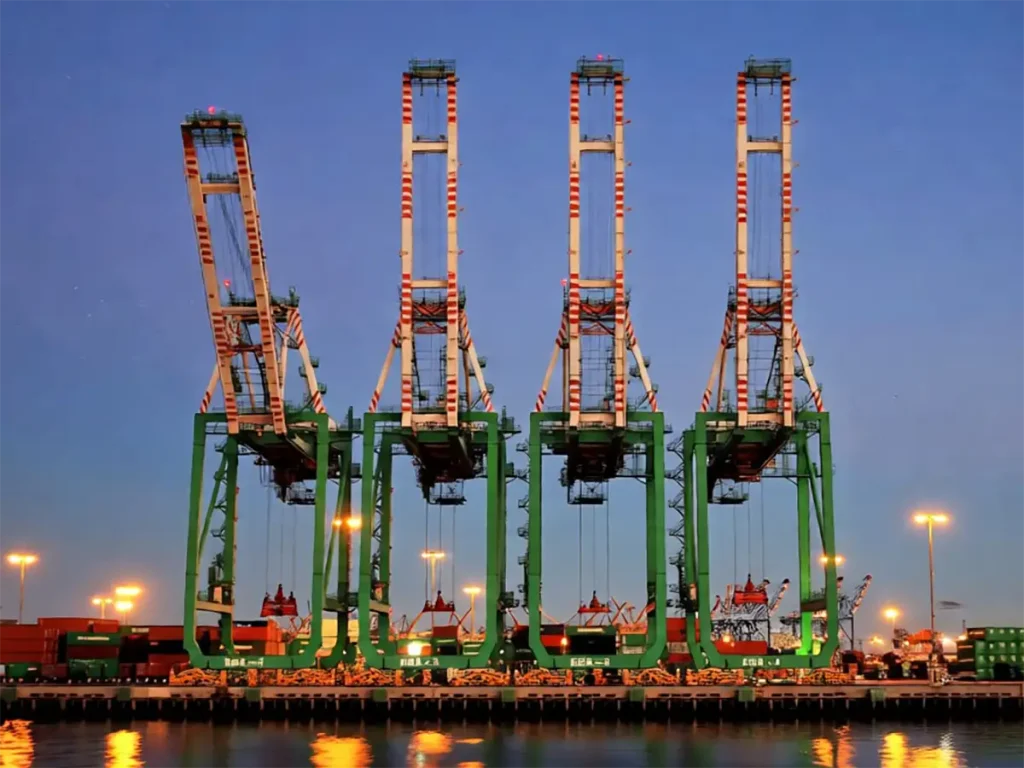
Port crane operations require many brake systems across both the crane hoists and the drive systems that move the crane along the rail. In addition to these brake systems, a method of clamping the rails is required so no movement occurs in the event of high wind forces — rail clamps anchor the crane, preventing unintended movement that could lead to catastrophic consequences.
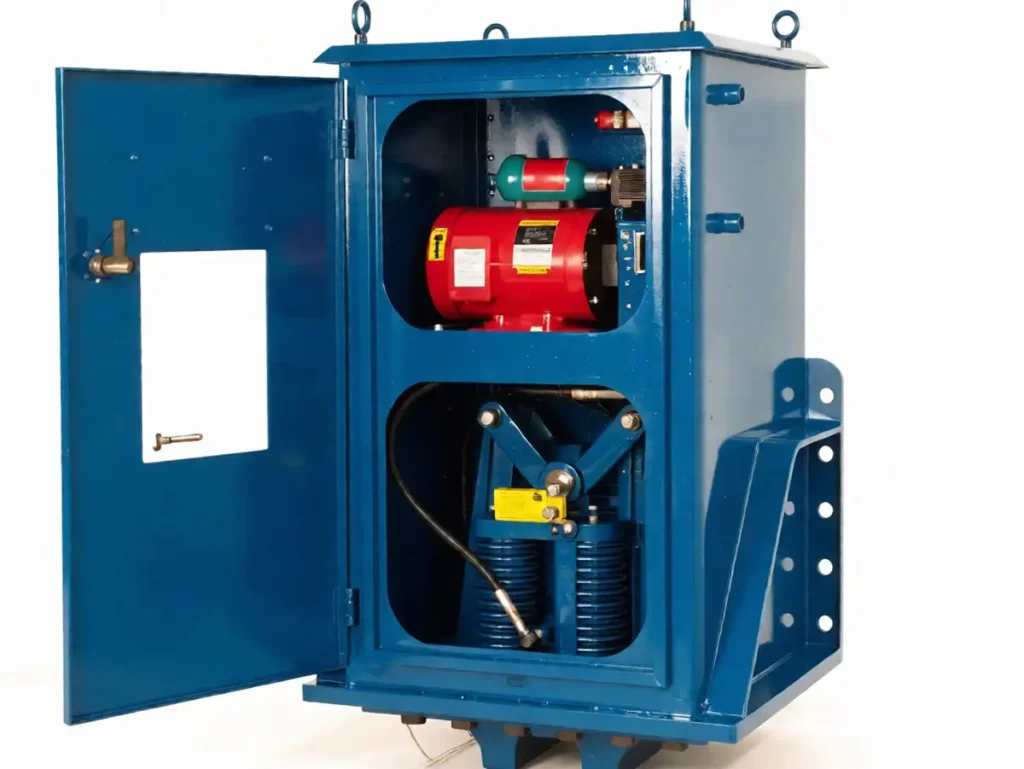
On hoists, the safest operation uses a dual braking method: brakes mounted to the high-speed side of the gearbox, plus additional brakes acting directly on the cable drum on the low-speed side, providing a failsafe in the event of a broken shaft or gears. As one example, a high-speed container crane has been fitted with Johnson Storm Brakes (rail clamps) and rail brakes, plus emergency caliper disc brakes acting directly on the hoist flange — with the rail clamp available in a truck-end mounting style, complete with an integral hydraulic power system mounted inside the same enclosure.